COMMUNITY SOLAR

Solar savings on your bill.
No panels, no problem.

Think Community Solar connects your utility account to a local solar farm—and delivers a discount on your electric bill every month for up to 20 years. It doesn't matter whether you rent or own. No rooftop required.
I've always wanted to somehow support solar, but having rooftop never made sense for us. So cool to finally be able to connect to a company that provides solar farm access...and at a discount on my bill?!
Sharon G.
Community Solar Customer
WHY JOIN

Why it's worth signing up.

Real savings,
month after month
Depending on your state and eligibility, you can receive a discount of 5–25% on your solar credits—applied to your electric bill every month for up to 20 years.
Your roof stays
exactly as it is
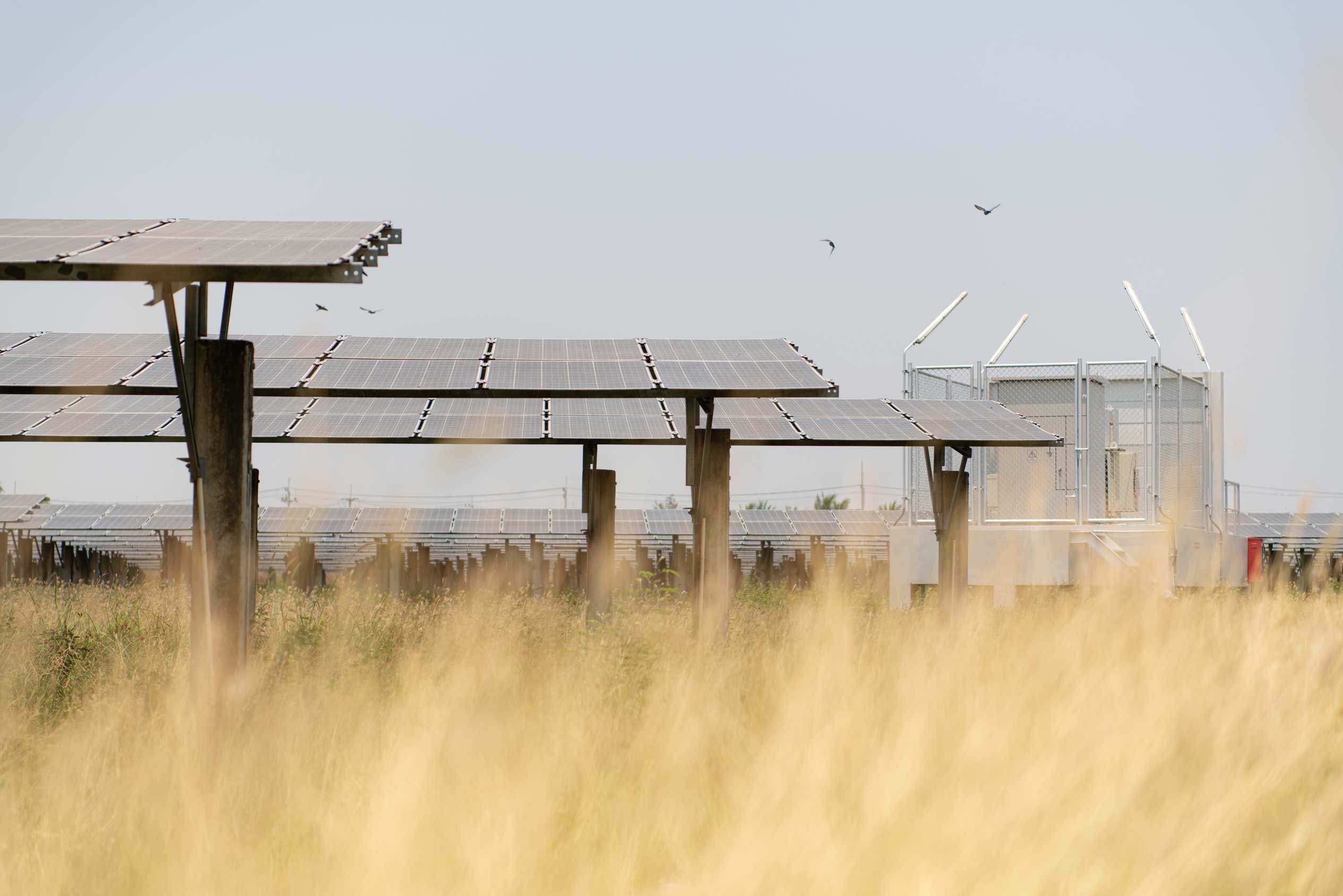
Community solar farms are built throughout your state. You subscribe to the output—you don't need panels, permits, or any work done on your home.
Free to join,
free to leave
There's no enrollment fee and no early termination fee. Cancel anytime without penalty.
You don't need
to own your home
If you pay an electric bill in a participating state, you're likely eligible—regardless of whether you rent or own.
Your subscription funds solar development in your community
Community solar farms are built locally. Your subscription supports clean energy projects and the jobs that come with them, right where you live.
*Discount rates and billing models vary by state and utility territory.

Clean energy. Local impact.

Community solar farms are built on your local utility grid. The clean energy they generate flows into the same grid that powers your neighborhood—making your community a little less dependent on fossil fuel generation with every billing cycle. Your subscription doesn't just save you money. It helps bring more renewable energy online, locally.
HOW IT WORKS

Here's how community solar works.

Local solar farms generate clean electricity
Solar developers build community solar farms throughout each state. These farms generate clean, renewable energy and feed it directly into the local electricity grid.
You subscribe to a share of the output
When you enroll, you're reserving a portion of the solar credits produced by a farm near you. You don't need to own property or install anything. You just sign up.
Credits appear on your electric bill
Each month, your allocated solar credits are applied to your utility bill—reducing what you owe to the utility. The exact credit amount depends on how much energy your share of the farm produces that month.
You pay a discounted rate for those credits
You pay Think Community Solar for the value of the solar credits you received, minus your contracted discount. In most markets, that payment is handled automatically. In some markets, it appears as a separate bill.
See what's available where you live
BILLING

How you'll see the savings on your bill.

Depending on your state, community solar billing works in one of two ways.

Utility Consolidated Billing

Everything stays on one bill. Your solar credits appear as line items on your regular utility bill, reducing what you owe. You just pay your utility as usual—Think Community Solar handles the coordination behind the scenes.

Dual Billing

You'll receive two separate bills: your regular utility bill (which shows the solar credits applied) and a separate bill from your community solar partner for the discounted value of those credits. AutoPay is required for the Community Solar partner bill. It's a little more to manage, but both bills together still reflect your savings.

Not sure which applies to you? Enter your zip code and we'll show you exactly what to expect in your area.

AVAILABILITY

Available in these states—with discounts that vary by location.

Think Community Solar is currently available in Illinois, Maine, Maryland, Massachusetts, Minnesota, New Jersey, New York, Rhode Island, Virginia, and Washington, D.C. Discount rates and billing models vary by state and utility territory. LMI (Low-to-Moderate Income) customers may qualify for enhanced discounts in most markets.

Availability within each state depends on solar farm capacity and utility territory. Some markets may have waitlists during periods of high demand. Enter your zip code to check what's currently available at your address.


Explore the map

Standard discount

Color shows the everyday discount off standard rates.

Hover a lit state See its standard discount, LMI discount and how it’s billed.
ELIGIBILITY

Income-eligible customers may qualify for more.

In most markets, customers who qualify as Low-to-Moderate Income (LMI) are eligible for higher discounts on their solar credits—and in some states, priority access to available farm capacity. LMI eligibility is typically determined by participation in qualifying assistance programs or by income level as defined by state and federal guidelines. You'll have the opportunity to upload LMI documentation during enrollment if it applies to you.

DIVE DEEP

Commonly asked
questions

What is community solar?

Community solar farms are built throughout each state, generating clean electricity that flows into the local grid. Instead of installing panels on your roof, you subscribe to a share of a farm near you. Each month, your share of the farm's output is converted into solar credits that reduce your utility bill.

Who can sign up?

If you pay an electric bill in a participating state and use at least 1,500 kWh of electricity per year, you're likely eligible—regardless of whether you rent or own your home. Small commercial customers may be eligible in some markets with limited availability.

How much will I save?

That depends on your state, your utility territory, and whether you qualify for LMI pricing. Standard discounts range from 5–25% on your solar credits. See the availability table above for details by state, or enter your zip code to see what's currently offered in your area.

How do solar credits work?

Each month, your community solar subscription generates a certain amount of solar credits based on your farm's output. Those credits are applied to your utility bill—reducing what you owe to the utility. You then pay Think Community Solar for the value of those credits minus your contracted discount.

Do I need to install anything on my home?

No. Solar farms are built throughout the state. You subscribe and benefit from the clean energy they produce—no installation, no permits, no changes to your home.

What's the difference between Utility Consolidated Billing and Dual Billing?

In Utility Consolidated Billing markets, everything shows up on your regular utility bill. In Dual Billing markets, you'll receive a separate bill from your community solar partner in addition to your utility bill. AutoPay is required for the community solar partner bill in Dual Billing markets. Enter your zip code to find out which model applies in your area.

When will I start seeing savings?

Community solar farms take time to build, and demand is high. Once your utility account is enrolled with a farm, it may take additional time for the farm to begin generating energy and for credits to appear on your bill. Think Community Solar will keep you updated on the status of your local farm and your first expected month of savings.

What if I move?

If your new address is within the same utility service territory, Think Community Solar will update your subscription to the new address. If you're moving outside your current utility territory, your subscription will be cancelled and you'll be notified about availability in your new area.

What if my solar credits exceed my utility bill one month?

In summer months, solar production can be high enough that credits exceed your utility balance. In most markets, excess credits roll forward and apply to future bills. The specifics depend on your state's program rules.

How does community solar interact with Think Energy supply?

Community Solar and Think Energy electricity supply are separate programs. You can participate in both, but each requires its own enrollment, and billing is handled separately.

How does community solar work in Maine?

Maine operates under a Net Energy Billing (NEB) kWh program. Solar credits in Maine are equal to the supply, transmission, and distribution kWh rate. Customers on Think Energy supply see a credit value equal to the Think Energy supply rate plus transmission and distribution. Customers on standard utility supply see the standard offer supply rate plus transmission and distribution.

Is there a fee to enroll or cancel?

No. There's no enrollment fee and no early termination fee. You can cancel anytime by contacting Think Community Solar customer care.

How do I cancel?

Contact Think Community Solar at 1-877-304-8172 (Monday–Friday, 9am–6pm EST) or careteam@thinkcommunitysolar.com.